Musical Texture: Monophonic, Homophonic and Polyphonic Music
Published November 12, 2026
Musical texture describes how the parts in a piece relate: one melodic line, a melody with accompaniment, several independent lines, or other combinations. The number of instruments matters less than what their parts are doing.
Three useful starting terms are monophonic, homophonic and polyphonic. The illustration compares their basic relationships. A fourth term, heterophonic, describes simultaneous versions of a shared melody. These labels help you listen to and plan an arrangement.
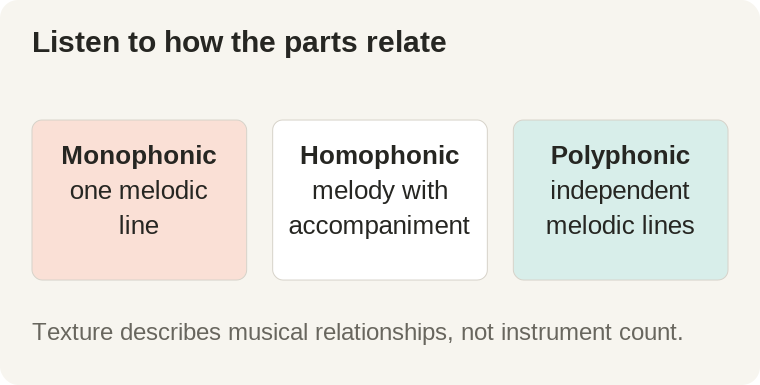
Several instruments can double one line; one keyboard player can perform several independent lines.
Monophonic: one melodic line
A single unaccompanied melody is monophonic. One voice can perform it, or several instruments can double the same line in unison or octaves. More performers do not automatically create more independent melodic material.
For an exercise, play C–D–E–G as one line, then have another instrument double it an octave lower with the same rhythm. You have changed the sound and register while preserving the single-line relationship. Timbre describes the sound-quality difference separately.
Homophonic: a leading melody with support
A prominent melody with chordal or other supporting accompaniment is a common homophonic texture. A singer above guitar chords or a piano melody above left-hand accompaniment can serve as a simple example.
The parts do not have to share one rhythm. The melody may hold a note while the accompaniment plays a repeated pattern. When several parts move in closely matching rhythms, the more specific term homorhythmic can be useful. Ithaca College's texture overview distinguishes the major categories and their musical roles.
Polyphonic: independent melodic lines
Polyphonic texture combines two or more lines with melodic independence. Each has a contour and rhythmic identity you can follow. The lines still interact harmonically, and one may draw more attention at a particular moment.
Imitation is one way to create this relationship: one part states an idea and another enters with it later, while the first continues. A round is a familiar example. You can also combine different melodic ideas rather than imitating the same one.
Independence does not require a large ensemble or equal loudness. Two lines can create a transparent texture, while a large group playing chords can sound dense. The melody-versus-harmony guide explains how simultaneous lines also create pitch relationships.
Heterophonic: variants of a shared tune
In heterophony, performers present versions of the same basic melodic line at the same time. One might hold a note while another adds an ornament, then both return to the shared shape. The relationship is different from two wholly independent melodies.
A sustained drone underneath a melody is not, by itself, an example of simultaneous variants of that tune. To hear heterophony in an exercise, keep the shared melody recognizable while allowing small differences in its ornamentation or timing.
Separate density from relationship
Words such as thin, dense, sparse or layered can describe how much material is sounding and how it occupies register. They add useful information, but they do not replace the line-relationship terms above. A texture can change within one piece as parts enter, leave or change roles.
The Open University's listening lesson on texture explores musical lines and layers. Try listening once for the leading line, then again for another part. Ask whether it doubles, supports, answers or develops independently.
Compare textures in Soundroo
Use the Soundroo prompt or connect your chat app. Ask for three versions of a short C-major phrase: melody alone, melody with quiet chord accompaniment, and two recognizable melodic parts with different rhythms. Keep the tempo and overall length similar.
For a fourth comparison, ask two instruments to share one tune while one adds a few ornamental notes. Listen to whether you hear one shared idea or two independent lines. The instrument arrangement guide helps turn that choice into a complete section, while song structure gives you places to change texture.